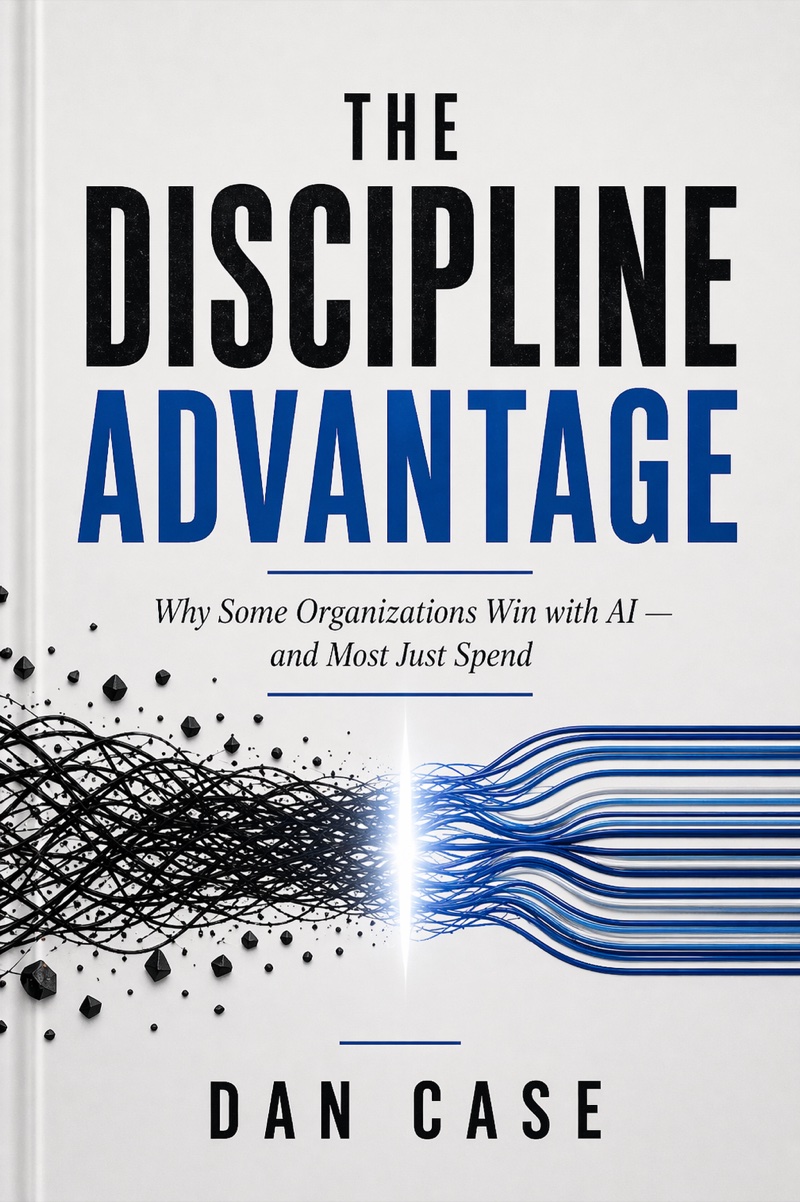
The Discipline Advantage
Why some organizations win with AI — and most just spend.
A 291-page argument, written for the C-suite executive who approved the budget, owns the outcome, and is tired of explanations that don't explain anything.
Same technology. Opposite outcomes.
The organizations behind the last decade's most visible AI failures ran the same technology that worked elsewhere. Watson-based oncology AI failed at MD Anderson; Cleveland Clinic ran AI-assisted diagnostics across its cardiology practice with measurable clinical outcomes. Amazon scrapped its AI recruiting tool; Unilever deployed AI screening for entry-level applicants and increased applications from underrepresented candidates by seventy percent. JPMorgan's COIN system eliminated 360,000 hours of annual manual work. McDonald's pulled its hundred-location AI pilot before the quarter ended.
Same technology. Opposite outcomes.
Research examining fifty-one enterprise AI deployments found that ninety-five percent of failures traced to organizational factors, not technical ones. The organizations that succeeded had made five specific decisions before execution began. The ones that failed had skipped at least one.
The Discipline Advantage names those five decisions as the Discipline Staircase, and proves each one through the organizations that got it right and the ones that didn't.
Sequential gates, not a checklist.
Each condition is a gate. The next step does not hold without the one before it. Skip one and the failure is set in motion before the first line of code is written.
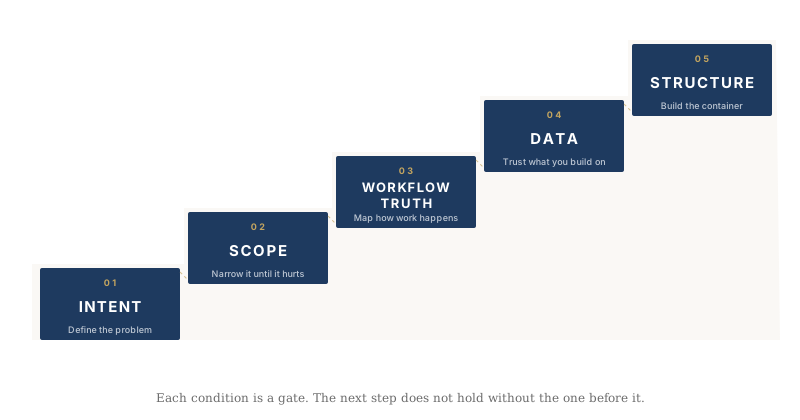
- Intent: Define the problem before you chase the solution Four leaders can unanimously approve an initiative while holding four different definitions of what it is for. That gap is where most initiatives die.
- Scope: Narrow it until it hurts MD Anderson's $62 million Watson failure didn't happen in one decision. It happened in twelve individually reasonable ones. Narrow scope produces evidence. Evidence earns expansion.
- Workflow Truth: Map how work actually happens Epic's sepsis prediction model performed exactly as designed. The workflow it was designed for didn't exist. The gap between the documented process and the actual one determines whether a system gets used or gets worked around.
- Data: Trust what you're building on The data you train on is a fossil record of how your organization actually operates, not how it was designed to operate. Amazon's recruiting tool learned exactly what it was taught. That was the problem.
- Structure: Build the container before you fill it When everyone is accountable for the outcome, no one is. NHS England's AI platform launched to 215 trusts. Fewer than fifty actively used it.
Eleven chapters. Three parts.
- Part One: Why This Keeps Going Wrong
- Why Smart Organizations Keep Getting This Wrong
- The Five Conditions
- Part Two: The Five Conditions
- No One Can State the Problem
- The Scope That Never Stopped Growing
- Built for the Whiteboard
- The Data That Couldn't Be Trusted
- Everyone Responsible, No One Accountable
- Part Three: From Initiative to Capability
- Reading the Signals
- When the System Gets It Wrong
- From Initiative to Capability
- The Discipline Advantage
Who this book is for
- → C-suite executives who approved an AI initiative and own the outcome
- → Board members evaluating AI strategy and governance
- → Heads of strategy, transformation, or platform organizations
- → Operators inside organizations whose AI investments aren't returning what was promised
Who it isn't for
- → Technologists building the systems (different problem, different book)
- → Readers looking for AI tool reviews or vendor selection guides
- → Audiences expecting techno-utopian framing; this book argues the opposite
The diagnosis is here. The build is in Book Two.
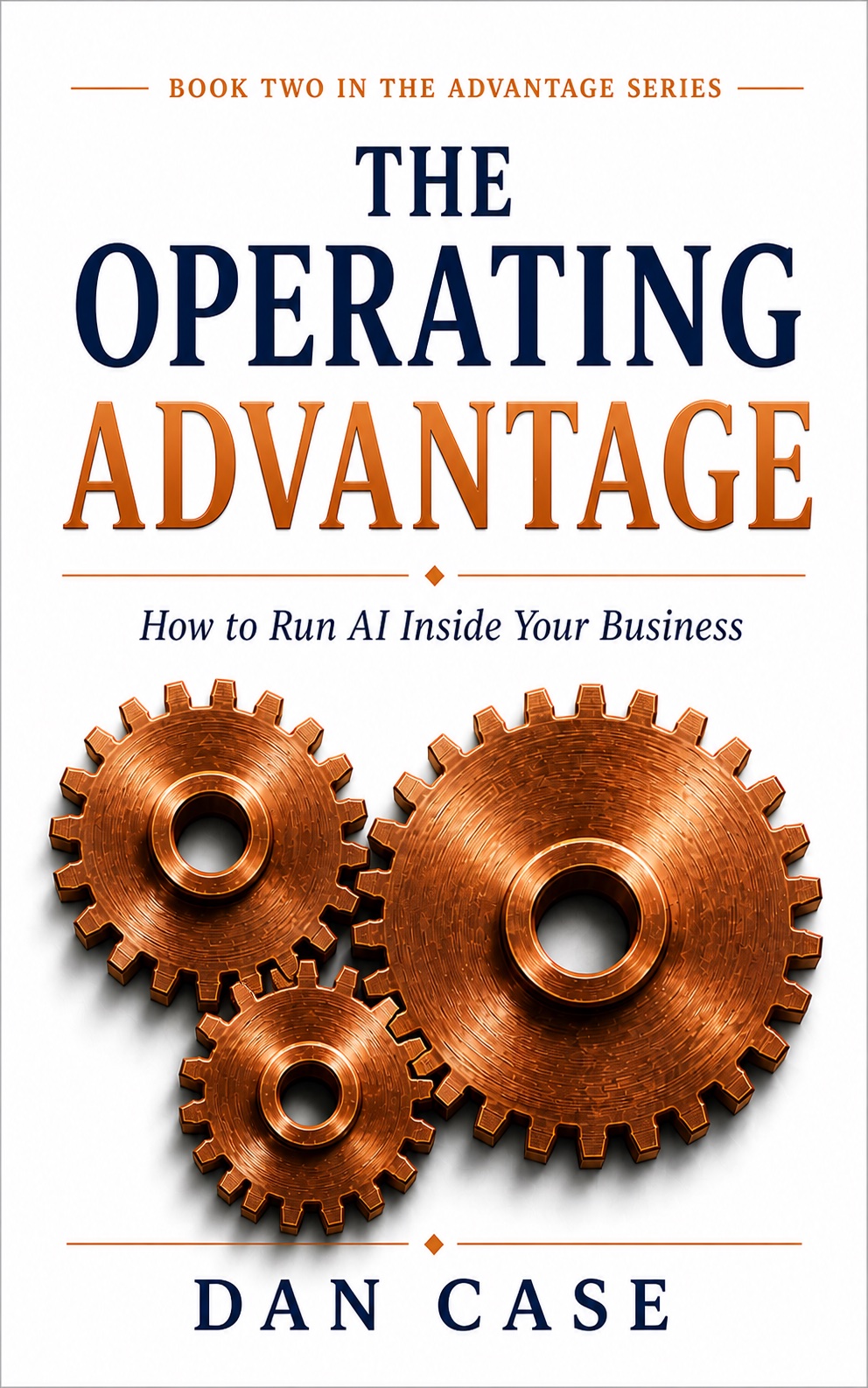
The Operating Advantage
Once the discipline work is done, the next question is how to actually build and run the system. Book Two is the practitioner's companion: architecture, retrieval, monitoring, FinOps, error handling, adoption, taught through a single fictional company that builds the capability one chapter at a time.
About Book TwoGet the book.
Two hundred and ninety-one pages. The full case set. The five conditions in order.